
A Scalable Firmware-Over-The-Air Architecture suitable for Industrial IoT Applications
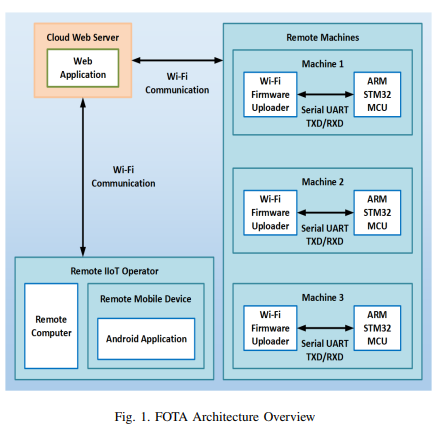
This paper proposes a reliable and scalable architecture for firmware-over-the-air updates, which provides remote cloud real-time distribution of new firmware versions on industrial machines in an efficient simultaneous manner. The architecture comprises remotely interconnected software and hardware systems for handling the procedures of firmware distribution over a wireless network. The main contributions are developing a special boot-loader for ARM micro-controllers and an Android application for performing FOTA updates. A simulation is performed using Web and Android applications showing
Dynamic Traffic Model with Optimal Gateways Placement in IP Cloud Heterogeneous CRAN
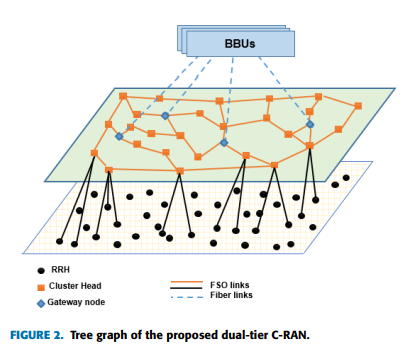
In this paper, topology design, optimal routing, and gateways placement selection algorithms are proposed in Heterogeneous Cloud Radio Access Network (C-RAN) with exploiting Free Space Optical (FSO) communication. The proposed network consists of two tiers; the lower tier concerns with clustering Remote Radio Heads (RRHs) based on traffic demands. The upper tier consists of transceivers along with the Cluster Heads (CHs) and gateways. Algorithms are proposed to achieve the lowest number of edges and the highest possible throughput based on the presented optimization problem. Moreover, route
Demonstration of Forward Collision Warning System Based on Real-Time Computer Vision
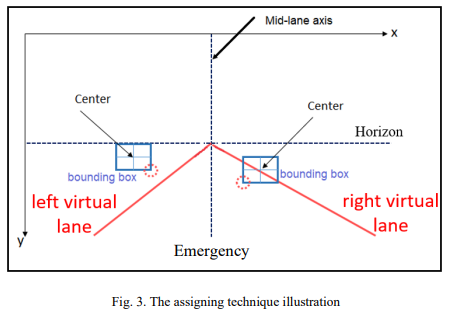
This paper demonstrates the software and hardware of a forward-collision warning system using techniques of realtime computer vision which helps self-driving cars and autonomous vehicles systems to merge with the road environment safely and ensure the reliability of these systems. The software approach of the paper consists of five parts: car detection, depth estimation, lane assignation, the relative speed of other cars and their corresponding speed limit and finally ultrasonic sensors which completes the front of the vehicle as the camera can't cover it alone. Besides these five objectives
6G: A comprehensive survey on technologies, applications, challenges, and research problems
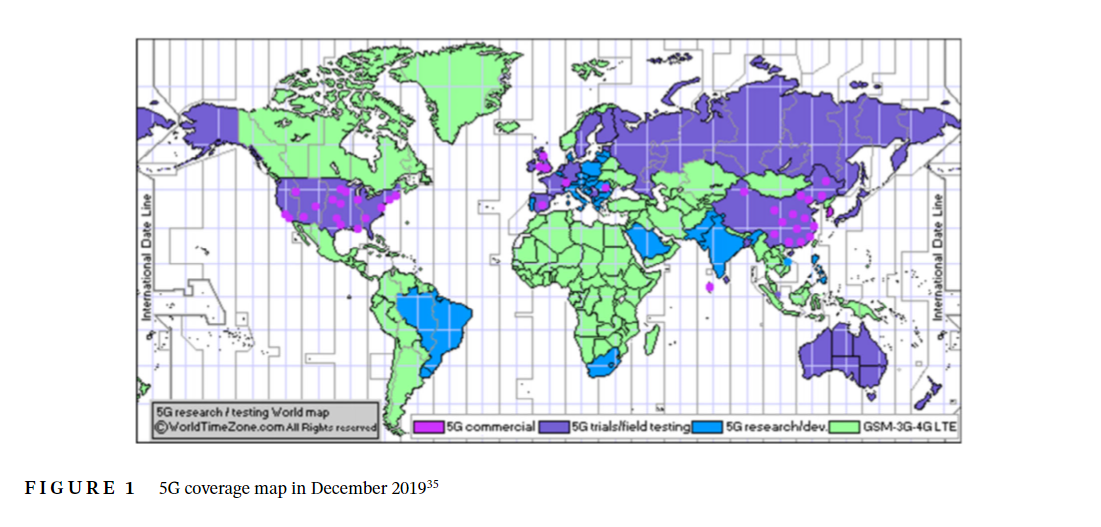
The inherent limitations of the network keep on going to be revealed with the continuous deployment of cellular networks. The next generation 6G is motivated by these drawbacks to properly integrate important rate-hungry applications such as extended reality, wireless brain-computer interactions, autonomous vehicles, and so on. Also, to support significant applications, 6G will handle large amounts of data transmission in smart cities with much lower latency. It combines many state-of-the-art trends and technology to provide higher data rates for ultra-reliable and low latency communications
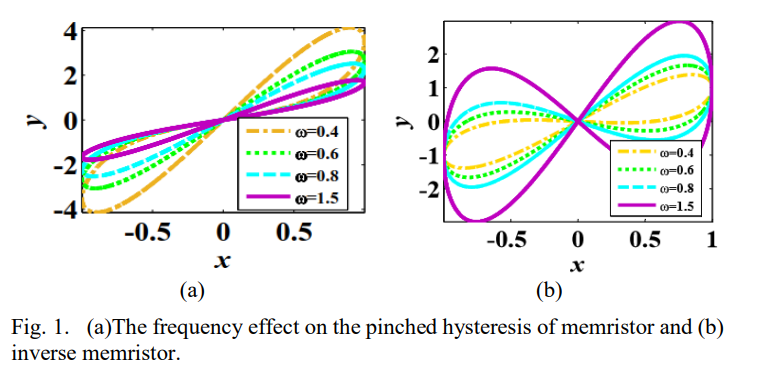
Inverse memrsitor emulator active Realizations
The paper aims to propose three different inverse memristor emulators based on serveral active blocks. One of the presented emulator realizes employing second generation current conveyor (CCII) andcanalog voltage multiplier with passive elements. The other two introduced emulators are designed using cureent feedback operational amplifier (CFOA) with two switches or two BJT transistor. One of the proposed emulators has the advantages that it switches between the inverse and memristor at the same time but in different frequency with less number of components. The introduced circuitry are
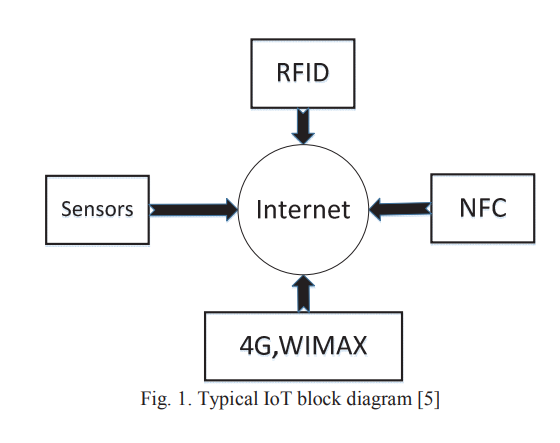
IoT ethics challenges and legal issues
IoT systems have different technologies such as: RIFD, NFC, 3G, 4G, and Sensors. Their function is to transfer very large sensitive and private data. There are many ethical challenges that need to be taken into consideration by individuals and companies that use this technology. Amongst the challenges is the user awareness of attack risks. This paper discusses different ethical and legal challenges that need to be taken in account for IoT health care applications during the near future. © 2017 IEEE.
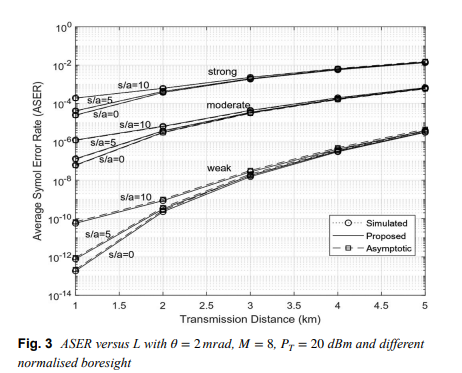
Generic evaluation of FSO system over Málaga turbulence channel with MPPM and non-zero-boresight pointing errors
Free space optical (FSO) communication channels are affected by fluctuations in irradiance due to atmospheric turbulence and pointing errors. Recently, a generalized statistical model knows as Málaga (M) was developed to describe irradiance fluctuations of the beam propagating through a turbulent medium. In this paper, an approximate finite-series probability density function (PDF) for composite M turbulence with pointing errors is verified. Considering multiple pulseposition- modulation (MPPM) with intensity modulation and direct detection, specific closed-form expressions for average symbol
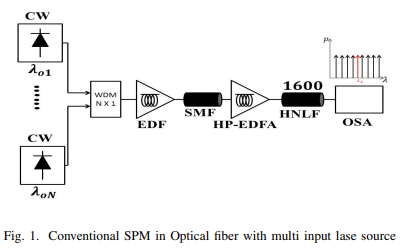
Generation of OFC by Self-Phase Modulation and Multiple Laser Sources in HNLF
Self-Phase Modulation (SPM) is a non-linear phenomenon relating to the self-induced phase shift encountered by the optical field during its transmission into the optical fiber. It is the most popular technique for generating an optical frequency comb (OFC) with different frequency spacing values. The SPM is regulated by many parameters such as fiber length, input optical power, and the non-linearity of the optical fiber. The OFC distinguishes between a high spectral flatness level, a high optical signal-to-noise ratio (OSNR) and a wide range of wavelengths. In this paper, The SPM uses to
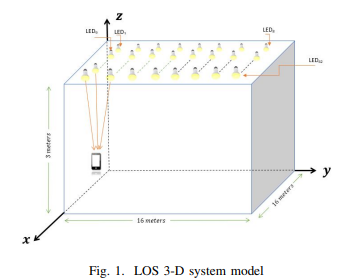
Visible Light Communications Localization Error Enhancement using Parameter Relaxation
In this paper, we propose applying a parameter relaxation technique to the location estimation algorithm that is based on the Received Signal Strength (RSS) of Visible Light Communications (VLC). A hybrid system of localization balancing is introduced, where the localization algorithm is developed with and without this efficient parameter relaxation. The results show that applying the parameter relaxation reduces the localization Root Mean Square (RMS) error by 43% of that without relaxation; and the processing time is reduced by 18% of that without relaxation. Moreover, the parameter
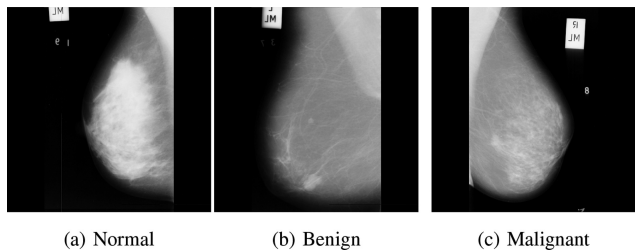
Early breast cancer diagnostics based on hierarchical machine learning classification for mammography images
Breast cancer constitutes a significant threat to women’s health and is considered the second leading cause of their death. Breast cancer is a result of abnormal behavior in the functionality of the normal breast cells. Therefore, breast cells tend to grow uncontrollably, forming a tumor that can be felt like a breast lump. Early diagnosis of breast cancer is proved to reduce the risks of death by providing a better chance of identifying a suitable treatment. Machine learning and artificial intelligence play a key role in healthcare systems by assisting physicians in diagnosing early, better