
A deep CNN-based framework for enhanced aerial imagery registration with applications to UAV geolocalization
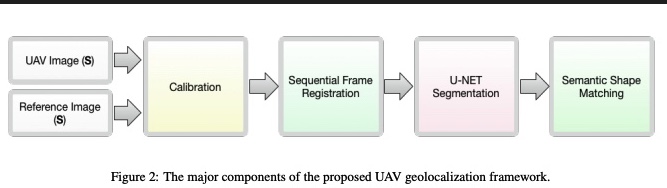
In this paper we present a novel framework for geolocalizing Unmanned Aerial Vehicles (UAVs) using only their onboard camera. The framework exploits the abundance of satellite imagery, along with established computer vision and deep learning methods, to locate the UAV in a satellite imagery map. It utilizes the contextual information extracted from the scene to attain increased geolocalization accuracy and enable navigation without the use of a Global Positioning System (GPS), which is advantageous in GPS-denied environments and provides additional enhancement to existing GPS-based systems
Combining lexical features and a supervised learning approach for arabic sentiment analysis
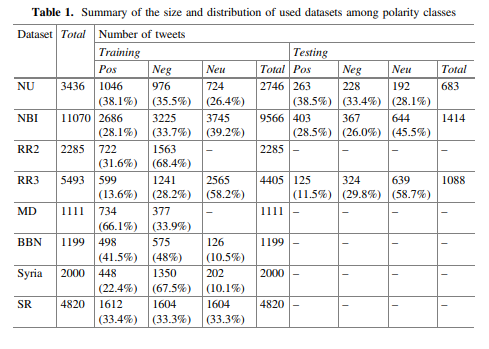
The importance of building sentiment analysis tools for Arabic social media has been recognized during the past couple of years, especially with the rapid increase in the number of Arabic social media users. One of the main difficulties in tackling this problem is that text within social media is mostly colloquial, with many dialects being used within social media platforms. In this paper, we present a set of features that were integrated with a machine learning based sentiment analysis model and applied on Egyptian, Saudi, Levantine, and MSA Arabic social media datasets. Many of the proposed
Convolutional Neural Network-Based Deep Urban Signatures with Application to Drone Localization
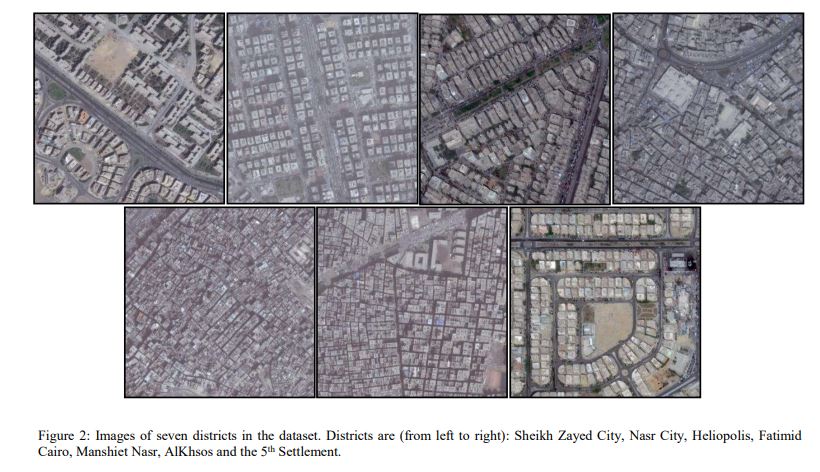
Most commercial Small Unmanned Aerial Vehicles (SUAVs) rely solely on Global Navigation Satellite Systems (GNSSs) - such as GPS and GLONASS - to perform localization tasks during the execution of autonomous navigation activities. Despite being fast and accurate, satellite-based navigation systems have typical vulnerabilities and pitfalls in urban settings that may prevent successful drone localization. This paper presents the novel concept of 'Deep Urban Signatures' where a deep convolutional neural network is used to compute a unique characterization for each urban area or district based on
Building large arabic multi-domain resources for sentiment analysis
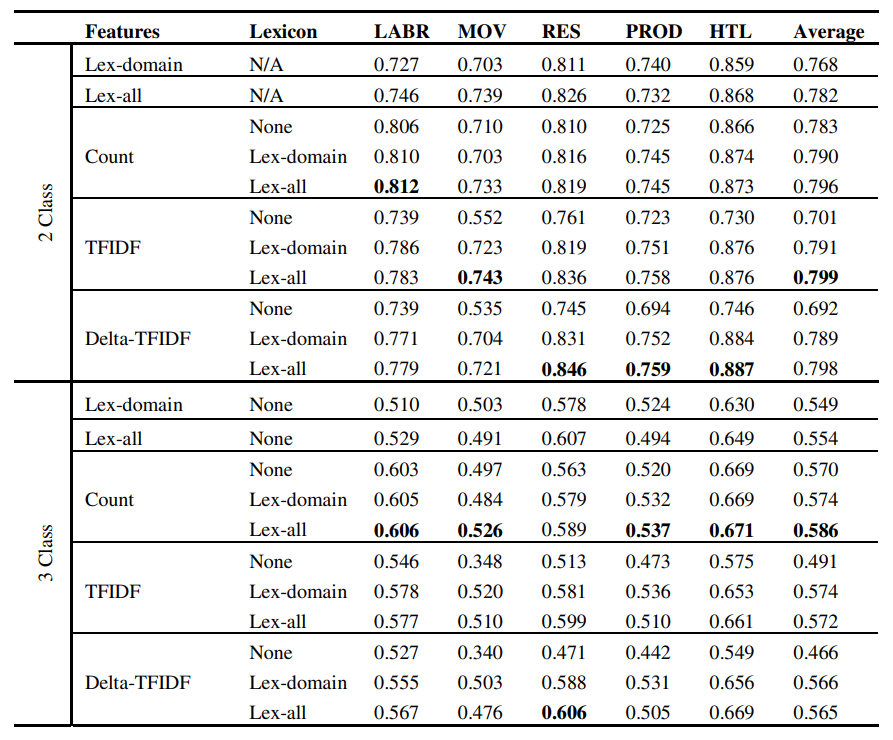
While there has been a recent progress in the area of Arabic SentimentAnalysis, most of the resources in this area are either of limited size, domainspecific or not publicly available. In this paper, we address this problemby generating large multi-domain datasets for Sentiment Analysis in Arabic.The datasets were scrapped from different reviewing websites and consist of atotal of 33K annotated reviews for movies, hotels, restaurants and products.Moreover we build multi-domain lexicons from the generated datasets. Differentexperiments have been carried out to validate the usefulness of the
Complementary feature splits for co-training
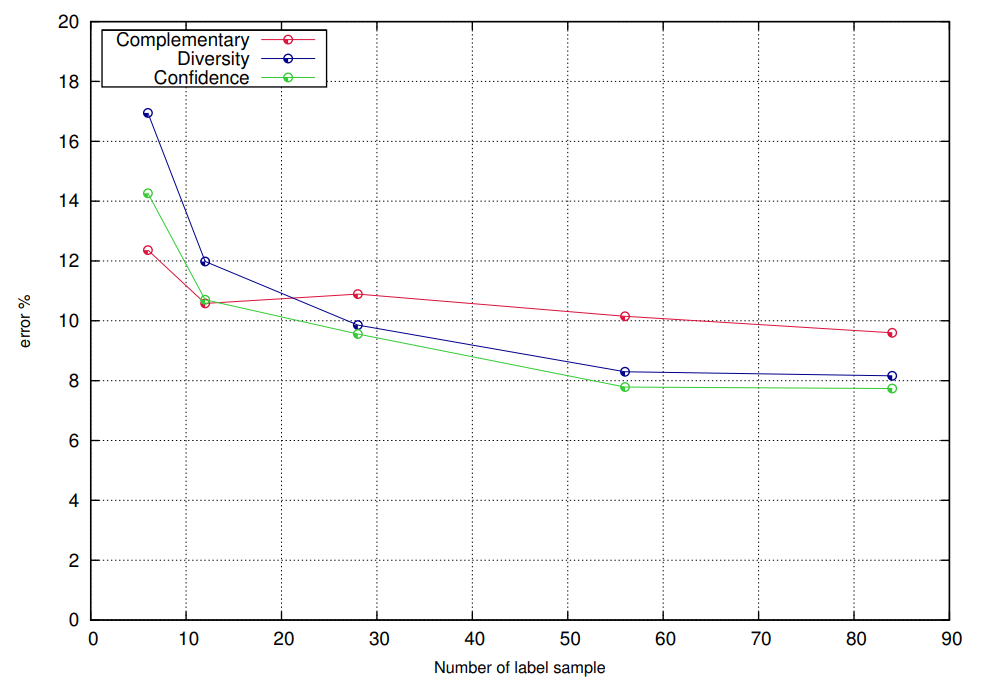
In many data mining and machine learning applications, data may be easy to collect. However, labeling the data is often expensive, time consuming or difficult. Such applications give rise to semi-supervised learning techniques that combine the use of labelled and unlabelled data. Co-training is a popular semi-supervised learning algorithm that depends on splitting the features of a data set into two redundant and independent views. In many cases however such sets of features are not naturally present in the data or are unknown. In this paper we test feature splitting methods based on
AraVec: A set of Arabic Word Embedding Models for use in Arabic NLP
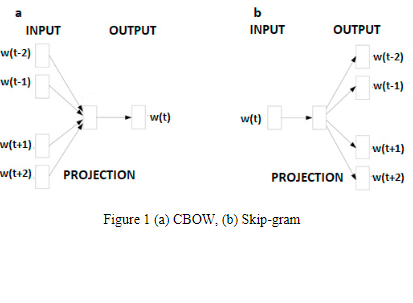
Advancements in neural networks have led to developments in fields like computer vision, speech recognition and natural language processing (NLP). One of the most influential recent developments in NLP is the use of word embeddings, where words are represented as vectors in a continuous space, capturing many syntactic and semantic relations among them. AraVec is a pre-Trained distributed word representation (word embedding) open source project which aims to provide the Arabic NLP research community with free to use and powerful word embedding models. The first version of AraVec provides six
Remote prognosis, diagnosis and maintenance for automotive architecture based on least squares support vector machine and multiple classifiers
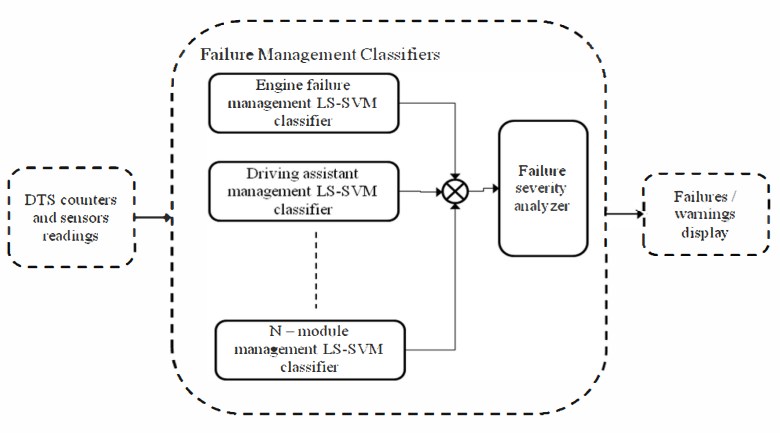
Software issues related to automotive controls account for an increasingly large percentage of the overall vehicles recalled. To alleviate this problem, vehicle diagnosis and maintenance systems are increasingly being performed remotely, that is while the vehicle is being driven without need for factory recall and there is strong consumer interest in Remote Diagnosis and Maintenance (RD&M) systems. Such systems are developed with different building blocks/elements and various capabilities. This paper presents a novel automotive RD&M system and prognosis architecture. The elements of the
Automated cardiac-tissue identification in composite strain-encoded (C-SECN) images using fuzzy K-means and bayesian classifier
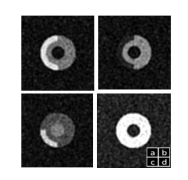
Composite Strain Encoding (C-SENC) is an MRI acquisition technique for simultaneous acquisition of cardiac tissue viability and contractility images. It combines the use of black-blood delayed-enhancement imaging to identify the infracted (dead) tissue inside the heart wall muscle and the ability to image myocardial deformation (MI) from the strain-encoding (SENC) imaging technique. In this work, we propose an automatic image processing technique to identify the different heart tissues. This provides physicians with a better clinical decision-making tool in patients with myocardial infarction
Multimodal Video Sentiment Analysis Using Deep Learning Approaches, a Survey
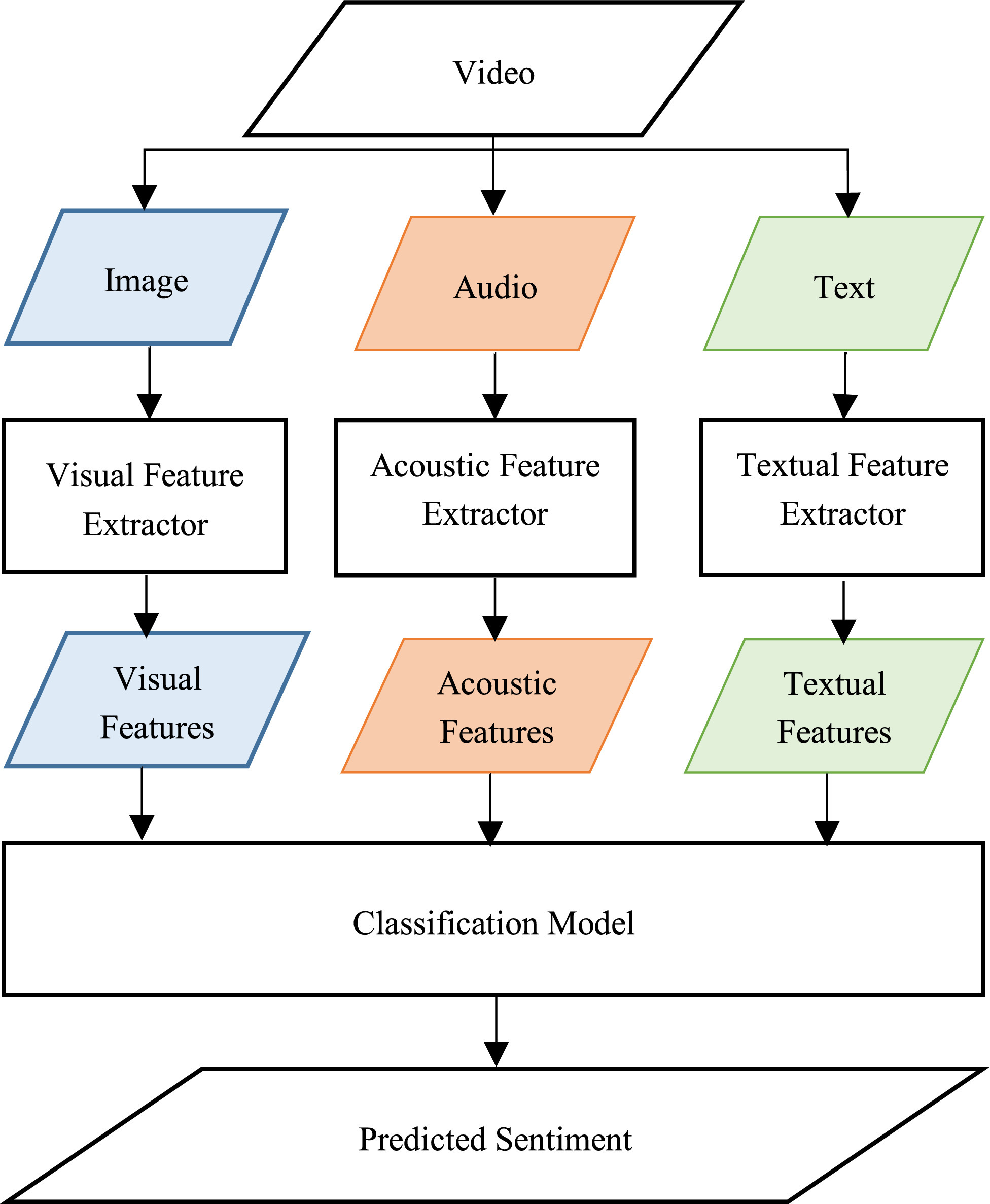
Deep learning has emerged as a powerful machine learning technique to employ in multimodal sentiment analysis tasks. In the recent years, many deep learning models and various algorithms have been proposed in the field of multimodal sentiment analysis which urges the need to have survey papers that summarize the recent research trends and directions. This survey paper tackles a comprehensive overview of the latest updates in this field. We present a sophisticated categorization of thirty-five state-of-the-art models, which have recently been proposed in video sentiment analysis field, into

Investigating analysis of speech content through text classification
The field of Text Mining has evolved over the past years to analyze textual resources. However, it can be used in several other applications. In this research, we are particularly interested in performing text mining techniques on audio materials after translating them into texts in order to detect the speakers' emotions. We describe our overall methodology and present our experimental results. In particular, we focus on the different features selection and classification methods used. Our results show interesting conclusions opening up new horizons in the field, and suggest an emergence of